
Stackable Pallet Containers as an Efficient Solution for Modern Logistics
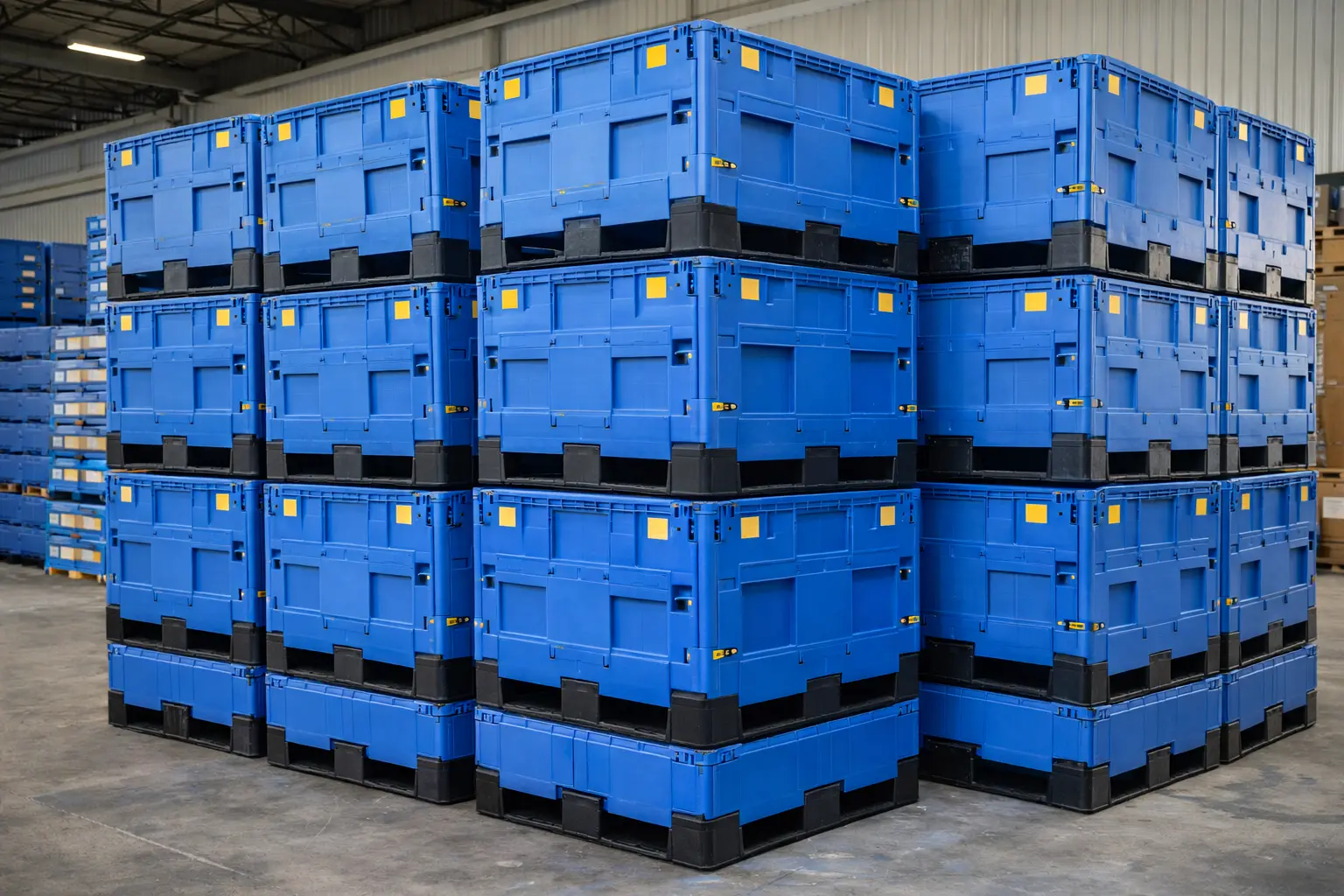
Stackable pallet containers play a crucial role in modern logistics because companies increasingly seek efficient, flexible, and space-saving storage solutions. As supply chains grow more complex, businesses must optimize warehouse capacity while maintaining product safety. These containers answer that challenge by combining durability, stackability, and ease of handling. As a result, many industries now rely on them to support streamlined operations and cost control. Continue reading to understand how these containers transform storage and transportation systems.
Read Also MSP Plastic Pallets
Understanding Stackable Pallet Containers
Stackable pallet containers are rigid storage units designed for safe stacking during storage and transport. Manufacturers typically produce them from high-density plastic or reinforced materials that withstand heavy loads. Their pallet-compatible base allows seamless movement using forklifts and pallet jacks. This design simplifies handling while reducing labor time.
Beyond structural strength, these containers offer standardized dimensions that support efficient space utilization. Warehouses benefit from vertical stacking, which maximizes cubic storage capacity. Consequently, businesses reduce floor congestion and improve workflow efficiency. These advantages explain why demand continues to rise across multiple sectors.
To fully appreciate their value, it helps to explore the industries that benefit most from these containers.
Industries That Rely on Stackable Pallet Containers
Many sectors depend on organized storage and secure transportation. Stackable pallet containers meet those needs by providing reliable protection and efficient stacking capabilities. Industries that manage high volumes or sensitive goods often consider them essential.
Stackable pallet containers serve manufacturing, automotive, food processing, and pharmaceutical industries. Each sector values different features, yet all benefit from improved handling efficiency. These containers adapt easily to diverse operational requirements.
Manufacturing and Automotive Applications
Manufacturing facilities manage components that vary in size and weight. Stackable containers allow systematic storage of parts while preventing damage during internal transport. Automotive suppliers especially rely on them to organize components along assembly lines.
In this context, stackable pallet containers improve inventory control and production flow. Workers access materials faster, which supports lean manufacturing practices. Additionally, standardized containers simplify logistics coordination between suppliers and assembly plants.
Food and Pharmaceutical Logistics
Food and pharmaceutical industries prioritize hygiene and product integrity. Containers used in these sectors often feature smooth surfaces that support easy cleaning. This design reduces contamination risks and supports compliance with strict regulations.
For temperature-sensitive goods, stackable pallet containers integrate well with cold-chain systems. Their stable stacking structure prevents shifting during transport, which protects packaged products. As a result, companies maintain quality while improving logistical efficiency.
Key Advantages of Stackable Pallet Containers
The growing adoption of stackable containers results from their clear operational benefits. Businesses that invest in them often experience measurable improvements in efficiency and cost management.
One major advantage involves space optimization. Vertical stacking allows warehouses to store more goods without expanding physical space. This approach lowers overhead costs and increases return on investment.
Another benefit relates to durability. Stackable pallet containers resist impact, moisture, and repeated handling. Their long service life reduces replacement frequency, which supports sustainable operations.
Cost Efficiency and Sustainability
Cost efficiency remains a priority for logistics managers. Reusable containers eliminate the need for disposable packaging. Over time, companies reduce material waste and packaging expenses.
Sustainability also improves through reduced environmental impact. Many stackable pallet containers use recyclable materials. By reusing containers across multiple cycles, businesses align logistics operations with environmental responsibility goals.
Design Features That Enhance Performance
The effectiveness of pallet containers depends on thoughtful design. Manufacturers incorporate features that enhance usability, safety, and adaptability across supply chains.
Collapsible or foldable options allow empty containers to occupy less space during return transport. This feature lowers reverse logistics costs and simplifies storage management. Ergonomic handholds also improve manual handling safety.
Through modular design, stackable pallet containers integrate seamlessly with automated storage and retrieval systems. This compatibility supports warehouse automation initiatives and future-proofs logistics infrastructure.
Safety and Load Stability
Safety remains critical in material handling. Containers with reinforced corners and locking mechanisms prevent shifting during stacking. Stable stacking protects both products and workers.
By using stackable pallet containers, companies minimize accident risks related to falling loads. Improved stability also reduces product damage during transit. These factors contribute to consistent operational performance.
Role in Global Supply Chains
Global trade requires reliable packaging solutions that withstand long transport cycles. Stackable pallet containers meet international shipping requirements while supporting efficient customs handling.
Standardized dimensions simplify container loading and unloading. As a result, logistics providers coordinate shipments more effectively. This standardization also improves tracking and inventory accuracy.
In global operations, stackable pallet containers help companies maintain consistency across multiple distribution centers. Uniform packaging supports predictable handling processes and reduces training requirements.
Choosing the Right Stackable Pallet Containers
Selecting suitable containers requires evaluating operational needs. Load capacity, material type, and industry compliance standards all influence the decision. Businesses should also consider compatibility with existing equipment.
Customization options further enhance value. Color coding, labeling, and RFID integration support advanced inventory management. With proper selection, stackable pallet containers become a strategic logistics asset rather than a simple storage tool.
Conclusion
Stackable pallet containers represent a practical and forward-thinking solution for modern logistics challenges. They improve space utilization, enhance safety, and support sustainable practices across industries. From manufacturing to global distribution, these containers strengthen supply chain efficiency. By investing in the right container systems, businesses position themselves for long-term operational success in an increasingly competitive logistics environment.
Email: info@msplastics.co.id
Tel: +62811160199

